
By: Jagun Quareeb Alabi
If you love someone with muscular dystrophy, you probably know this feeling well. That knot in your chest when you watch them struggle. The voice in your head that says, “I should be able to fix this.” The exhausting loop of hospitals, prayers, research, and specialists. All of it driven by one deep, honest desire: to make the pain stop.
But no matter how many doctors you visit, no matter how hard you pray, no matter how many Google searches you make at 2 am, you cannot cure a genetic condition on your own.
And sitting with that truth is one of the hardest things a caregiver, sibling, or parent will ever have to do.
Accepting that you are not God
This is not said to be harsh. It is said with love. You did not choose your genes. You did not design your sibling’s muscles. There is no button you failed to press. The guilt that says “I should have done more” is a liar. You could not have prevented this.
“Accepting what is outside your control is not giving up. It is releasing a weight you were never supposed to carry.”

Shift From ‘Fixing’ to ‘Supporting’
Once you let go of the pressure to fix, a different and better question opens up: “How can I make their life richer today?”
Maybe it’s learning how to help them transfer safely from bed to wheelchair. Maybe it’s showing up for every hospital appointment, even the boring ones. Maybe it’s just sitting beside them and watching a Nigerian movie together without making it about the condition.
These things don’t cure MD. But they ease the loneliness. And loneliness is often harder to live with than the condition itself.

Allow Yourself to Grieve
You are allowed to be sad too. You may grieve the future you imagined – running together, playing on the same football team, and dancing at a wedding without a wheelchair in the picture. That grief is real, and it is valid. You don’t have to pretend you are fine.
Grief doesn’t mean you’ve lost hope. It means you loved deeply. Talk to a trusted friend. Join a support group. Write it down. Let the feeling move through you instead of sitting in your chest forever.

Celebrate the small wins; they are not small.
The world celebrates big things.
- Trophies.
- Graduations.
- Promotions
But when you are living near MD, you see another kind of victory.
“I stood a few seconds longer than I did last week.” Finishing a full school term despite hospital visits. One full day outside without a major fall. Laughter on a Tuesday afternoon. When you take the time to celebrate these moments, you are telling your loved one that their life has meaning. That message is medicine.
A Different Kind of Protector
You may not be able to shield your loved one from MD. But there is so much else you can guard.
- Honour their dignity.
- Protect their joy.
- Involve them in decisions regarding their own lives.
- Remind them how far they have come and guard their hope.
That is not weakness. That is the bravest, most beautiful kind of protection there is.
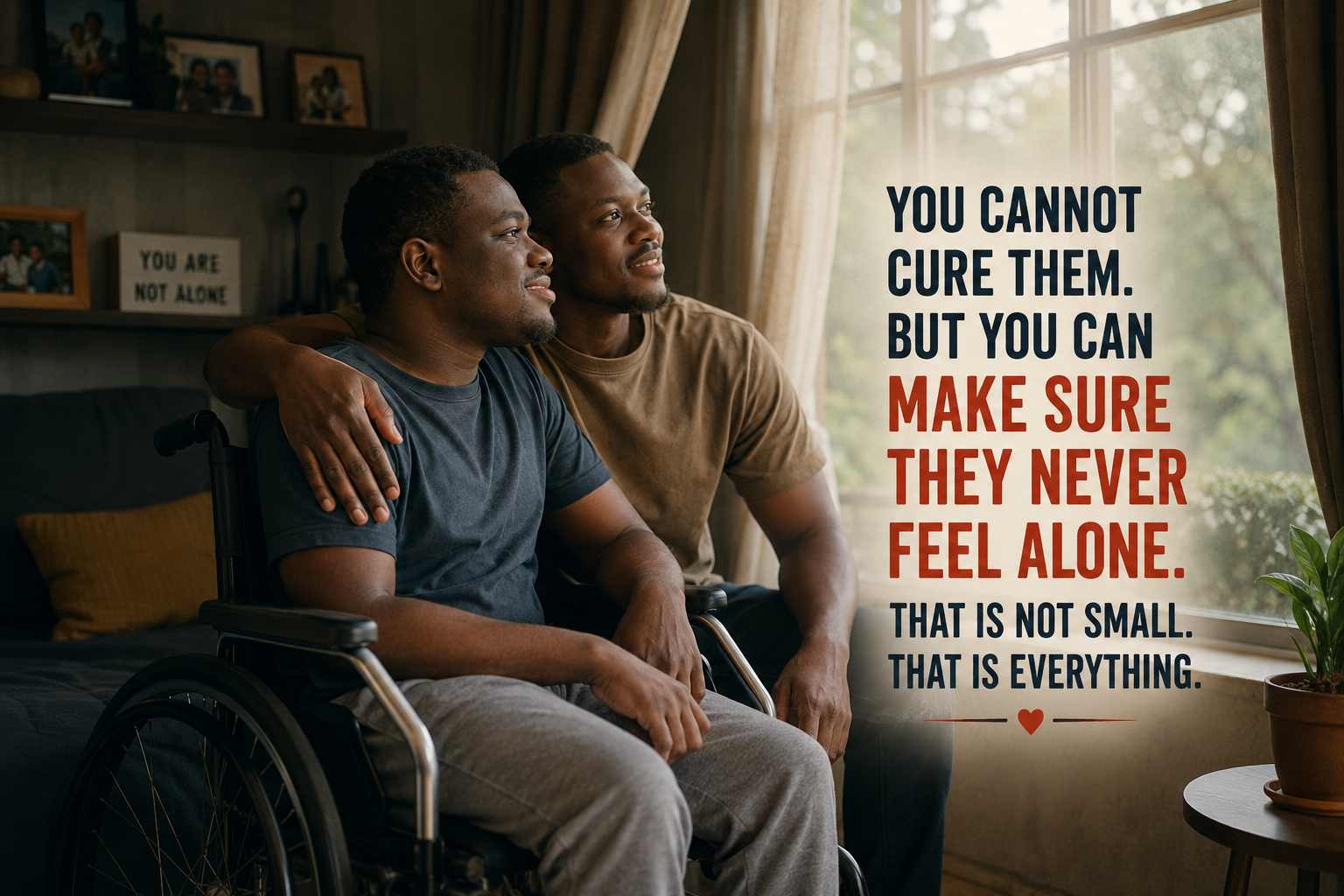
“You cannot cure them. But you can make sure they never feel alone. That is not small. That is everything.”

You are not Alone in this
At FNSN, we walk this road with warriors and their families — every step of the way. Contact us




Leave a Reply