
FNSN @10 | Article 1 of 6
Written by Oyindamola Aina Adeniyi | Founder, Foundation for Neuromuscular Support Nigeria
Growing up in Ado-Odo, Ogun State, I believed my siblings were the only people in Nigeria living with muscular dystrophy, a rare condition that affects the muscles. I never saw anyone else with the same condition in our community or our schools.
As a child, I did not see it as a medical condition. I thought they had a spiritual problem, something a pastor or spiritualist could fix.
We prayed. We fasted. We visited different churches and tried remedies people recommended.
Nothing changed.
But then, a book changed everything.
I was reading Questions Young People Ask Volume 2 by Jehovah’s Witnesses when I came across a picture that looked exactly like my elder brother.
The boy was not Black, and that surprised me. I had grown up watching Africa Magic Yoruba movies where conditions like this were often linked to curses or witchcraft. So I thought my siblings had a spiritual problem.
Then I saw the caption beside the photograph:
“I have muscular dystrophy.”
That was the first time I knew the name of what my siblings had been living with.
A Teenager on a Mission
I saved money and went to a cybercafé a few kilometres from home. I typed the words into Google. Pages and pages of results came up.
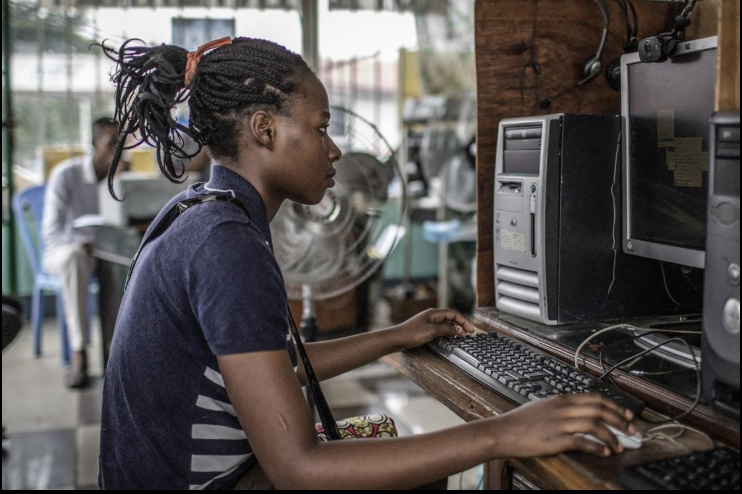
I read everything and took notes. Every symptom matched what my siblings were going through.
I kept reading, hoping I would find a cure or treatment I could take home to them. I was ready to write everything down so we could get whatever they needed.
Then I came across a sentence that broke my heart.
Muscular dystrophy has no cure.
I read it again.
No cure?
How?
As a teenager, I believed the modern world had a solution for everything. With science so advanced, a cure had to exist somewhere. Reading those words felt like hope disappearing in one sentence.
I went home disappointed, but I also left with something that changed my life: the knowledge that we were not alone.
Other families out there were fighting this exact same battle. For the first time, the phrase “rare disease” actually made sense to me.
Closer Than I Ever Imagined
Not long after, I found someone living with muscular dystrophy just a few streets from that cybercafé. I could not believe it. I always thought that if I ever met another patient, they would be in a different state, not in my own neighborhood, where I grew up thinking my siblings were the only ones.
I introduced him to my siblings, and they became friends quickly. Sadly, he later passed away.
Years later, I met another person with the condition in our area. Then another. And another.
Today, I know of at least four people who have lived with muscular dystrophy right in that same community.
What I Began to See
As I met more families, I noticed a painful pattern: parents hid their children away from public spaces. I quickly understood why. Without support, stigma forced them into hiding. That changed how I viewed the word “rare.”
“Rarity is not the same as invisibility.”
Muscular dystrophy is medically rare, but the people have always been here.
What was missing was
- Awareness.
- Diagnosis.
- Community.
- Courage and
- Safety for families to speak out without shame.
For years, I thought my siblings were the only ones. Now I know better. The disease was never invisible.
Silence made it seem that way.
You Are Not Alone
Next in the FNSN @10 series: Five Stories. Five different journeys.
Coming September 5, 2026.


Leave a Reply